Single-storey rear. Side return. Wraparound. Double-storey. Basement. Conservatory.
The terminology alone is enough to make moving look appealing again. Each type of house extension has its own costs, its own planning rules, and its own ways of going wrong if you pick the wrong one.
The good news is most properties narrow the field for you. Your plot, your layout, and your budget will rule certain options out before you’ve even sat down with a builder.
This guide walks you through every major type of house extension, how big you can build, and how to choose the right option for your home.
Why Extend Rather Than Move?
The maths used to be simpler. If your house was too small, you sold it and bought a bigger one. In 2026, that calculation has shifted – and most homeowners we speak to have already done the sums before they pick up the phone.
Stamp duty on a £450,000 house is £12,500. Estate agent fees on the sale of your existing home will run another £4,000-£7,000. Add solicitor fees, surveys, removals, and the cost of all the things you’ll inevitably want to change in the new house, and you’re often looking at £20,000-£30,000 in moving costs before you’ve gained a single extra square foot of living space.
For that kind of money, you’re a meaningful way into a single-storey rear extension. For the £50,000-£80,000 the move might cost when all’s said and done, you’ve covered the lot.
The other factor is harder to put a number on. Most people who’ve lived somewhere for a few years like the road, the neighbours, the school catchment, the local pub. Extending lets you keep all of that and shape the house around how you actually live, rather than starting again somewhere that nearly fits but doesn’t quite.
The Different Types of House Extension
Before you can decide which extension is right for your home, it’s worth understanding what’s actually on the table. The type you pick isn’t just an aesthetic choice – it determines what you’ll spend, what planning route you’ll need, how much disruption you’ll live through, and how much value the finished project adds.
Some types suit certain properties perfectly and others don’t suit them at all. Below are the main configurations you’re likely to be choosing between:
Single-Storey Rear Extensions
The most common extension in the UK, and for good reason – single-storey rear extensions are relatively straightforward to build, they often fall under Permitted Development, and they tend to deliver the kitchen-diner most homeowners are actually after.
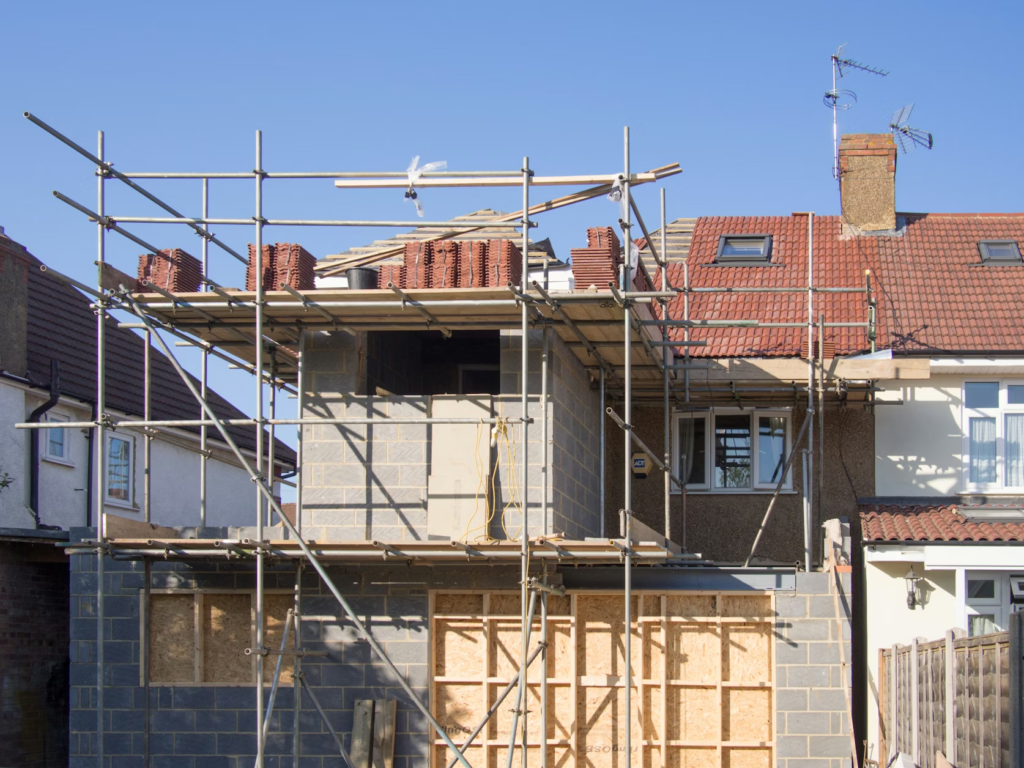
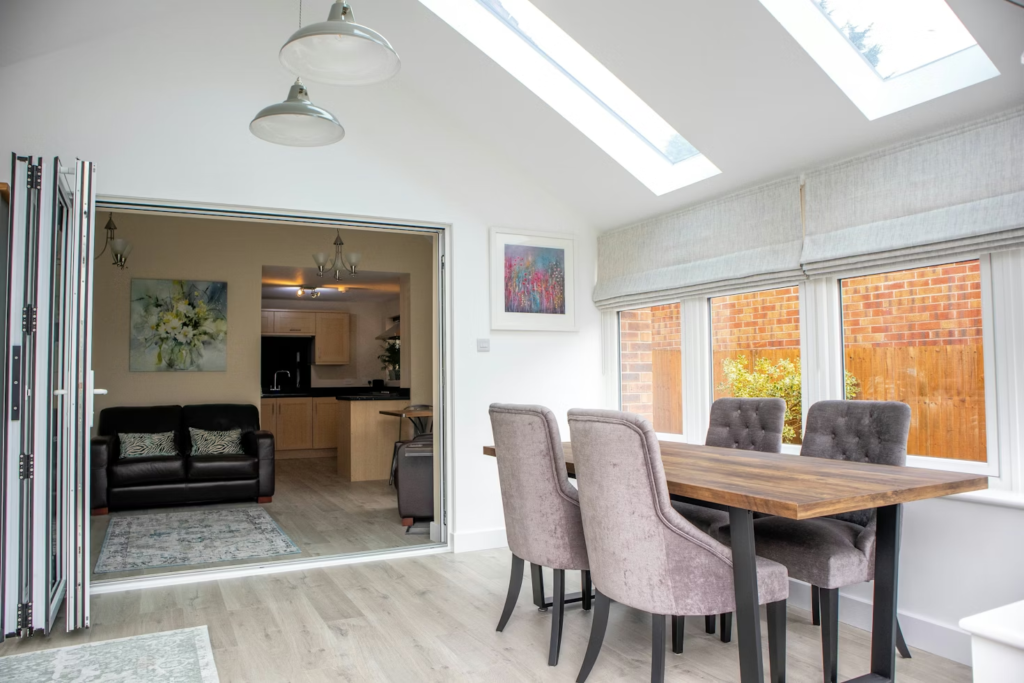
A single-storey rear extension takes space from the back garden and uses it to open up the ground floor, usually creating a much larger kitchen, dining and living zone in one.
Side Return Extensions
Common on Victorian and Edwardian terraces, where there’s a narrow strip of underused outside space running down the side of the kitchen. A side return extension fills in that gap, squaring off the ground floor and turning a cramped galley kitchen into something properly liveable. They’re often combined with a small rear projection to create more substantial open-plan space.
Side Extensions
A full side extension differs from a side return in that it adds a meaningful amount of width to the house rather than just filling in an existing gap. They’re best suited to detached or semi-detached properties with proper space to one side, and they can be single or double storey. Done well, they can transform the proportions of a house and create rooms that feel like they were always there.
Wraparound Extensions
A wraparound combines a rear extension with a side return or side extension, creating an L-shaped footprint that significantly enlarges the ground floor. They’re one of the most transformative options on this list, opening up the back of the house to the garden while reclaiming awkward side space at the same time. They suit Victorian and Edwardian terraces particularly well, but work on plenty of other property types too.
Double-Storey (Two-Storey) Extensions
Double-storey extensions add space on the ground floor and the floor above, usually in a single project. They tend to be the best value option on a per-square-metre basis – the foundations, roof, and groundworks are largely the same as a single-storey build, but you’re getting twice the floor area. For homeowners short on bedrooms as well as living space, they’re often the smart move.
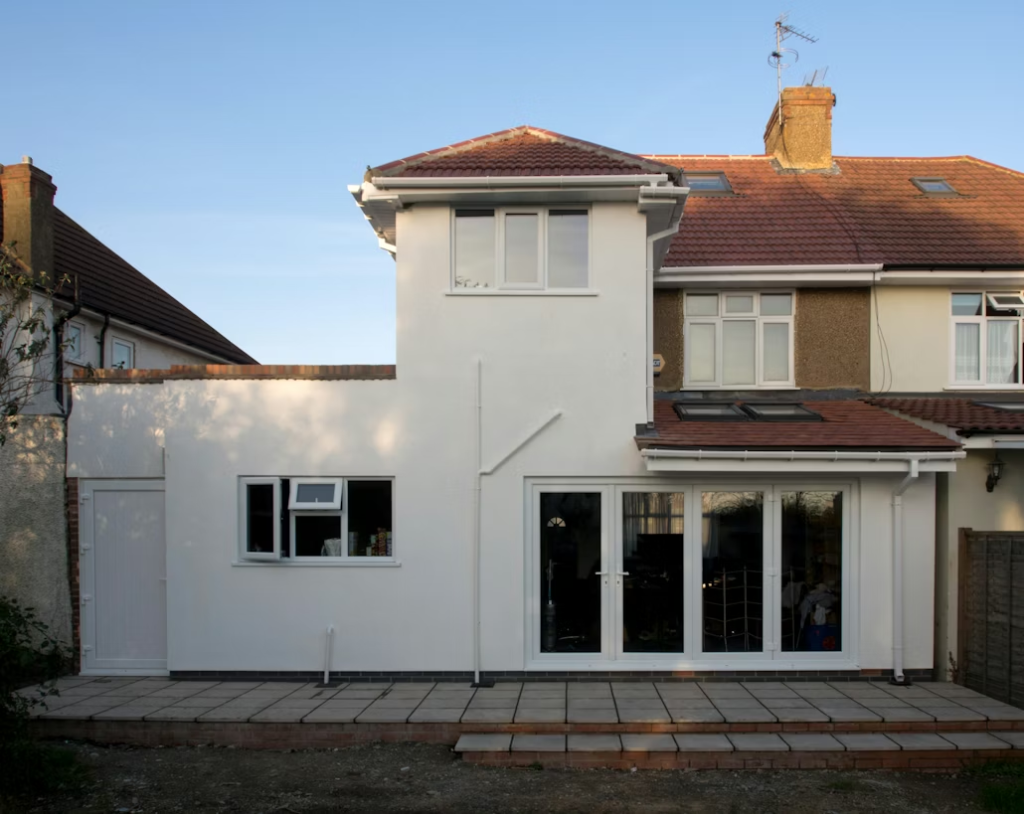
Over-Structure Extensions
Building above an existing single-storey element – a garage, a utility room, or a porch – is one of the more overlooked options, and one of the most cost-effective when the existing structure can take the load. You’re getting a new room on the first floor without the cost of new foundations or groundworks, which makes the per-square-metre cost comparatively favourable.
Basement Extensions
Digging down rather than out. Basement extensions create significant space without affecting the footprint or the garden, but they’re the most expensive and most disruptive option on the list. They tend to make sense on high-value properties in built-up areas where outward extension isn’t possible – historically London, but increasingly relevant in some Bath and Bristol postcodes too.
Porch Extensions
The smallest extension on this list, but a useful one. A porch can solve a real practical problem – somewhere to take coats and boots off, somewhere parcels can sit out of the rain – and on the right property, it can lift the curb appeal noticeably. They’re cheap, quick, and almost always fall under Permitted Development.
Conservatories & Orangeries
Worth a brief mention because homeowners often consider conservatories and orangeries alongside extensions, but they sit in a different category. A traditional conservatory is mostly glazed, often unheated, and rarely usable year-round. An orangery is closer to a true extension – solid walls, a partial glazed roof, proper insulation – and is often treated as such by surveyors.
How Big of an Extension Can You Build?
Two things govern how big your extension can be: what the planning system will allow, and what your property can physically accommodate. Most homeowners focus on the first. In our experience, the second is what really shapes the final design.
What Permitted Development Allows in 2026
Permitted Development (PD) lets you build without a full planning application, within set limits.
For single-storey rear extensions in England, the standard allowance is up to 4m projection from the original rear wall for a detached house, and 3m for a semi or terrace. The Larger Home Extension route – which requires prior approval but not full planning – extends those to 8m and 6m respectively.
Eaves can’t exceed 3m within 2m of a boundary. Overall height is capped at 4m. Side extensions must be single storey, no more than half the width of the original house. Materials need to match the existing property. Extensions and outbuildings combined can’t cover more than 50% of the land around the original house.
PD doesn’t apply to flats, listed buildings, conservation areas, or AONBs. A Lawful Development Certificate is worth applying for – it’s the document buyers’ solicitors will ask for years down the line.
When You’ll Need Full Planning Permission
If you’re exceeding PD limits or your property doesn’t qualify, you’ll need a full planning application. Straightforward schemes take around 8 weeks; complex ones up to 13. Well-designed extensions on appropriate properties get approved more often than not, particularly when the agent has spoken to neighbours in advance.
Listed buildings need separate Listed Building Consent on top of planning permission.
The Physical Limits of Your Property
This is where most projects actually get shaped. The most common constraints we run into are public sewers under the proposed footprint (which usually need a build-over agreement), party walls requiring formal notice, existing foundations that won’t take an additional storey, and rights to light affecting neighbouring windows.
The garden you’ll have left is also a real constraint, even though no one writes it on the plans. Lose more than half your usable outside space and the extension’s value is often partially cancelled out by what you’ve sacrificed to build it.

How Much Can You Extend Your House – In Practical Terms?
Once you know what the planning system allows and what your property can support, the question shifts from “how big can I build?” to “how big should I build?” That’s a different question, and it’s the one that decides whether the project is a good one.
The Garden You Want to Keep
A useful rule of thumb: don’t lose more than half your usable garden to an extension. Beyond that, you start running into a problem surveyors and buyers both notice – the house has gained square footage, but it’s lost the outside space that made it appealing to families in the first place.
The exact balance depends on the property. A four-bedroom family home with a 30m garden can lose a meaningful chunk and still feel generous. A small terrace with a 6m yard can’t. Walk the garden before you commit to the design, not after.
Matching the Extension to Your Local Ceiling Price
Every street has a ceiling price – the most a property on that road has sold for in the last year or two. Spend up to it and your extension is likely to return its cost. Spend past it and you’re paying for your own enjoyment, not for resale value.
We’ve seen homeowners pour £100,000 into a £280,000 house on a street where the best sold price was £340,000. The extension was beautifully built. It also lost them money the moment they signed the contract. A quick call to a local estate agent before you commission drawings can save you a great deal of grief.
Which Type of Extension is Right for Your Home?
Every property is different, and so is every homeowner’s reason for renovating. A well-planned upgrade in Yeovil might make complete financial sense; the same work on the same house in a different town might not. Local market conditions, ceiling prices, planning context, and the specific character of your property all shape what’s worth doing and what isn’t.
If You’ve Got a Period Terrace or Semi
A side return or rear extension tends to be the strongest move here. Most Victorian and Edwardian terraces have an underused alleyway down the side of a narrow galley kitchen, and filling it in opens up the ground floor into the kitchen-diner most buyers expect. Pair it with a loft conversion if you need a third or fourth bedroom, and you’ve usually hit the sweet spot for both liveability and resale.
If You’ve Got a 1930s or Post-War Semi
These houses were built with reasonable proportions but small, separated rooms that don’t suit the way most families live now. A rear extension to open up the kitchen, or a wraparound that incorporates the side passage, transforms the layout without fighting the architecture. Many are also good candidates for double-storey rear extensions, since the original footprint and ceiling heights tend to support it cleanly.
If You’ve Got a Detached House with a generous plot
You’ve got the most options and the fewest constraints, which can actually make the decision harder. A double-storey rear or wraparound extension will give you the biggest uplift in usable space, but the question worth asking is whether you’ll hit the local ceiling price before you’ve recouped the spend. In this scenario, restraint and quality of finish often matter more than sheer square footage.
If You’re Short on Garden
Going up rather than out is almost always the answer. A loft conversion adds a bedroom and often an en-suite without losing a square foot of outdoor space, and a rear dormer or L-shaped dormer can add surprising volume to a terrace or semi. If the loft’s already done, an over-garage extension or a modest infill is usually a better bet than eating further into the garden.
If You’re in a Conservation Area or Listed Property
Expect a slower, more involved process and budget accordingly. Permitted development rights are usually restricted or removed entirely, so you’ll need full planning permission and, for listed properties, listed building consent on top.
The work that tends to get approved is sympathetic rather than ambitious: rear extensions in matching materials, careful loft conversions that don’t alter the roofline visibly from the street, and internal reconfiguration that respects original features. A pre-application chat with the local conservation officer is almost always worth the time.
Planning a House Extension in Somerset or the South West?
Every property is different, and so is every homeowner’s reason for renovating. A well-planned upgrade in Yeovil might make complete financial sense; the same work on the same house in a different town might not. Local market conditions, ceiling prices, planning context, and the specific character of your property all shape what’s worth doing and what isn’t.
That’s where an honest conversation with an experienced local builder earns its keep. A good one won’t just quote the work – they’ll tell you what they’d do in your position, flag the jobs that aren’t worth it, and help you spot the details that make the difference between a renovation that adds value and one that doesn’t.
At Building Craftsmen, we’ve been doing exactly that for over thirty years. We handle extensions, loft and garage conversions, full renovations, and new builds across Somerset, Dorset, and the wider South West.
If you’re weighing up a renovation and want practical, no-nonsense advice on whether it’s the right call for your home, we’d be happy to talk it through.
CTA: Get in touch or request a quote today.
FAQs
Do I need planning permission for a house extension?
Not always. Many smaller extensions fall under permitted development, which lets you build without a full application provided you stay within set limits on size, height, and position.
You’ll need full planning permission for larger extensions, double-storey work closer to boundaries, or any build in a conservation area or on a listed property. You’ll still need building regulations approval and, often, a party wall agreement.
How long does a house extension take to build?
Expect size to twelve months from first sketch to finished room. On-site construction typically runs ten to fourteen weeks for a single-storey rear extension and sixteen to twenty-four weeks for double-storey or wraparound builds. Design, planning, and building regulations add several months at the front end. Build in a four to six week contingency; very few extensions finish exactly on schedule.
Which type of extension adds the most value to a home?
A kitchen-diner extension and a loft conversion with a double bedroom and en-suite are the two most reliable value-adders, typically returning five to fifteen percent. Both directly address what buyers are looking for.
The honest answer is that the type matters less than the execution; a thoughtful, well-finished smaller extension will almost always outperform a larger but poorly planned one.
Is it cheaper to extend or move house?
For most people staying in the same area, extending is cheaper once you account for stamp duty, agent fees, legal costs, and removals, which can total £30,000–£50,000 before you’ve gained any extra space.
Moving makes more sense if you’ve outgrown the plot, the local ceiling price is close, or you want to change area, school catchment, or commute.
Can I live in my home during a house extension?
Often yes, but it depends on the scope. Single-storey rear extensions are usually liveable throughout, with two to three weeks of serious disruption. Whole-house renovations or projects affecting the only kitchen or bathroom are far harder.
Plan for dust, noise, early starts, and weeks without a working kitchen. If you have young children or work from home, factor temporary accommodation into the budget.
Can I extend a listed building?
Yes, but the process is slower, more constrained, and more expensive. You’ll need both planning permission and listed building consent, covering internal as well as external work. Conservation officers tend to favour extensions that are subordinate to the original building and use sympathetic materials.
Engaging a heritage-experienced architect and arranging a pre-application meeting is essentially mandatory; unauthorised work is a criminal offence.
Will an extension affect my home insurance?
Yes, and you must tell your insurer before work starts. Standard policies rarely cover extension works, so your builder should carry contractors’ all-risk insurance, and you may need a separate renovation policy during the build.
Once finished, update your buildings sum insured to reflect the new rebuild cost. Failing to notify your insurer can invalidate your cover entirely.